
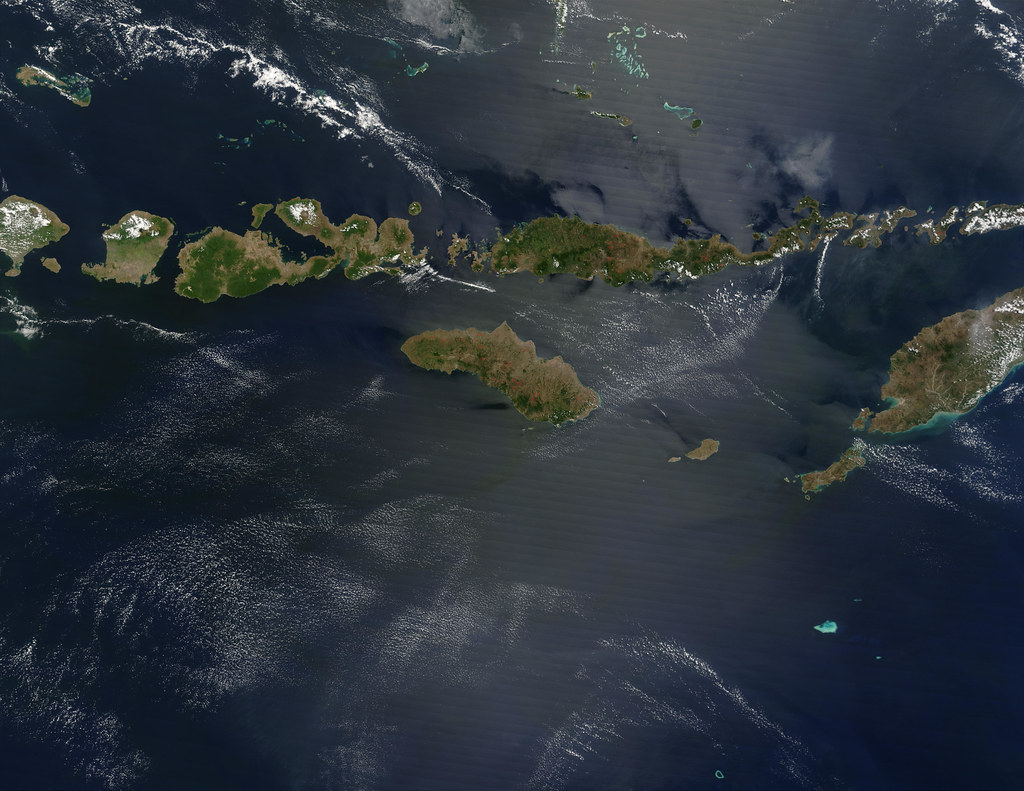
The Java sea in Indonesia, a hub for exports from Indonesia, with Java to the south, Sumatra to the west, and Sulawesi to the east. Shallow and extensive, the Java sea reinforces trade and cultural exchange, and provides several economic opportunities through abundance in oil and natural gas and fishing. In fact, fishing is the main occupation as well as the main source of protein of several coastal families living in regions surrounding the Java sea.
However, there is a new pattern observed: Fishing in the Java sea has now limited to very few people, and poverty has been increasing in these regions surrounding the Java sea.
This is due to two main factors: Overfishing and ocean pollution. Ocean pollution is increasingly alarming in these regions as it is one of the reasons that ocean population is dwindling, along with overfishing. Plastic or waste is released in the oceans, breaking down into toxic micro and nano plastics, which find their way into marine populations’ systems and leads to them dying of poisoning. These plastics can also, as a whole, choke aquatic organisms, eventually killing them.
Fishing, being a livelihood in this area, seems to have become so extensive, that it has ended up resulting in severely declining populations of fish. This eventually leads to fish populations becoming endangered or extinct and this paucity of fish in the seas disrupts the marine ecosystem.
Partly due to waste, fish are not resurfacing in the Java sea, as mangroves and coral reefs have been destroyed to a point beyond no return. Therefore, very few people continue fishing in the sea, and have shifted to different areas to fish.
Currently, Indonesia is trying to regrow these mangroves and clear ocean debris so that fish populations have a healthy medium to respawn in. The Mangrove Development Centre, which carries this out, has just been launched to restore fish populations.
 Saving the Blue Heart
Leave a comment