

I went to Nepal on the Everest Base Camp hike a few weeks ago, and it was the experience of a lifetime. From mornings of excitement and not knowing what lies in the day ahead, to meeting the amazing people living in the Khumbu region it was an unforgettable adventure.
On one of my acclimitization days on the trek, I visited a museum called Sagarmatha Next. The objective of Sagarmatha Next is to promote sustainability in the mountains by recycling waste and making artwork out of it, all from the Khumbu region. About 40,000 people on average visit the region leading up to the Everest Base Camp, a year. This builds up plastic waste from disposable items like plastic bottles, caps, masks, cylinders and general waste products in this region.
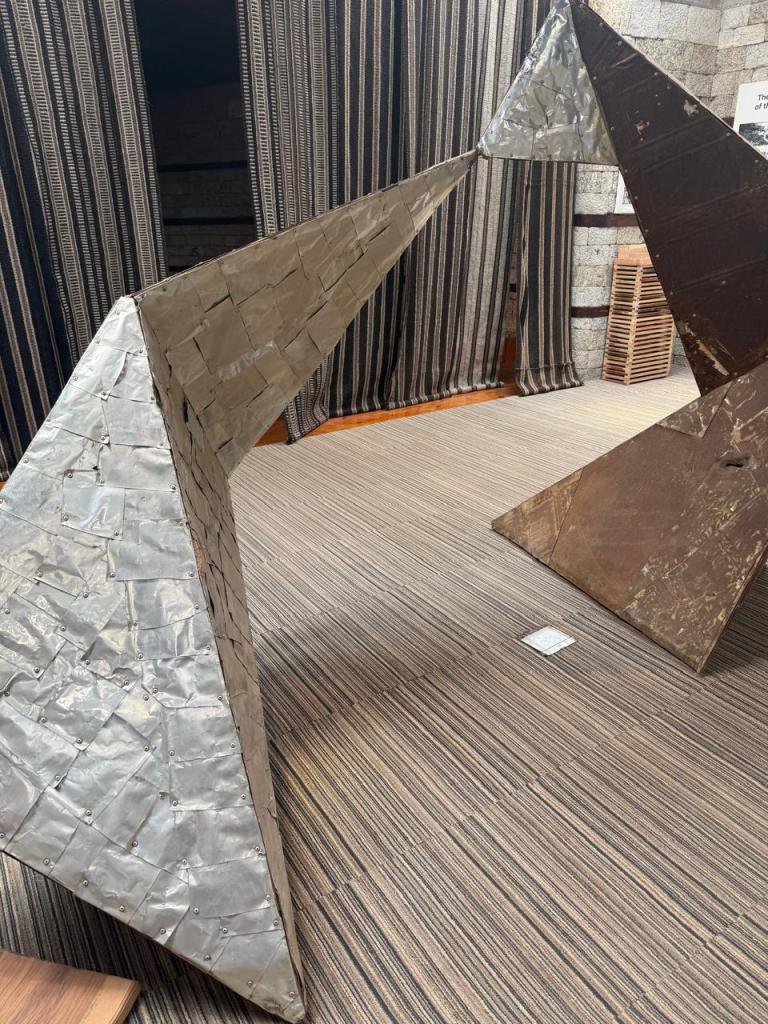
Sagarmatha Next’s mission is to eradicate this waste and allow trekkers and artists to contribute to their journey. They collaborated with the Sagarmatha Pollution Control Committee (SPCC) and introducted ‘carry me back’ bags for tourists.
The ‘Carry me back’ initiative involves tourists bringing back 1 kg of waste collected from the Khumbu region back from the mountains so that it can be recycled. The museum also has exhibits of art made by mountaineers who lost their lives hiking and climbing different mountains.

An art gallery in Sagarmatha Next, the Denali Schmidt art gallery, is named after a hiker and artist who passed away climbing the mountain K2 during an avalanche.
After speaking to the co-founder of Sagarmatha Next, Tommy Gustafson, I received several valuable insights about plastic pollution and waste in the mountains and it inspired me more about making real impact on what I stand for.
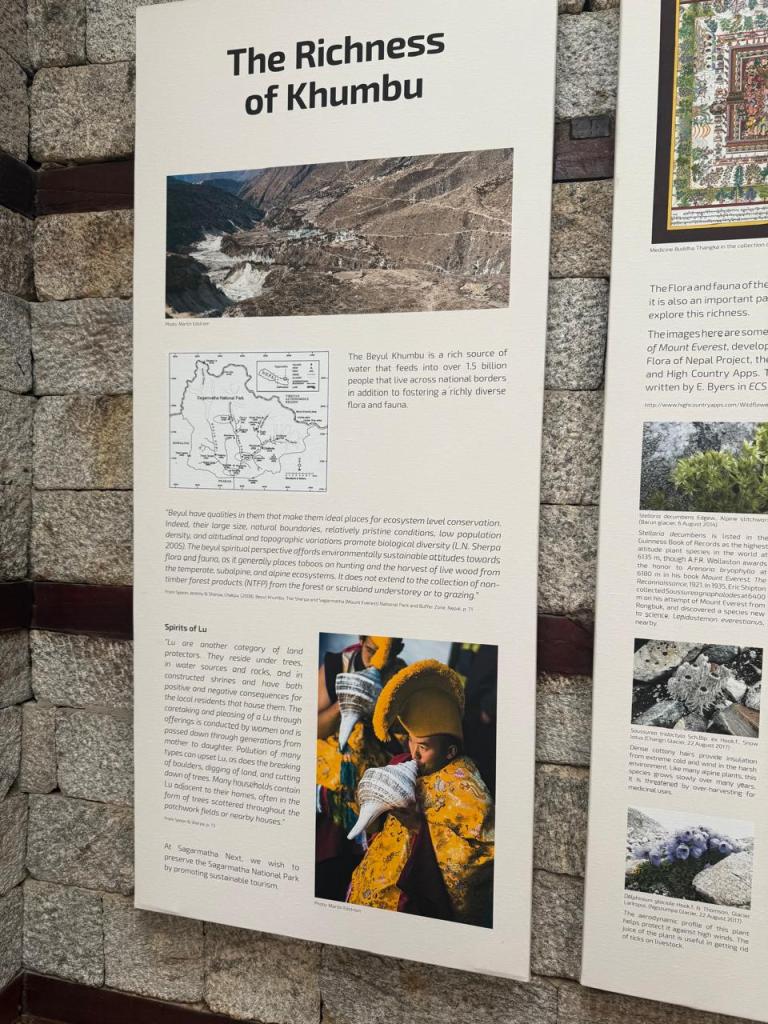
So let’s look to Sagarmatha Next as an inspiration, that no matter where in the world we are, if we care about an issue, we can work on it and create real impact. Now that it’s being done real time on the mountains, we can try to carry out similar impact in the cities and the oceans.
 Saving the Blue Heart
Leave a comment